

When searching for train tickets, you might come across a ‘sold out’ label. However, this doesn’t always mean that the Amtrak trains are packed. Generally, ‘sold out’ indicates that specific segments between certain stations are booked, rather than implying that every seat on the train is taken for the entire route. By understanding how this system works, you can explore booking strategies that many passengers overlook. Let’s talk about sold-out Amtrak trains.
What “Sold Out” Actually Means on Amtrak
When you see “sold out,” you might assume the train is packed from start to finish. This isn’t always the case.
Amtrak considers trains sold out when one section of a route or itinerary is fully booked. For example, if the segment between Denver and Grand Junction on the California Zephyr is fully booked, you won’t be able to book a trip from Chicago to San Francisco, even if there are available seats for travel from Chicago to Denver and from Grand Junction to Emeryville. This is because your journey requires passing through the sold-out segment.
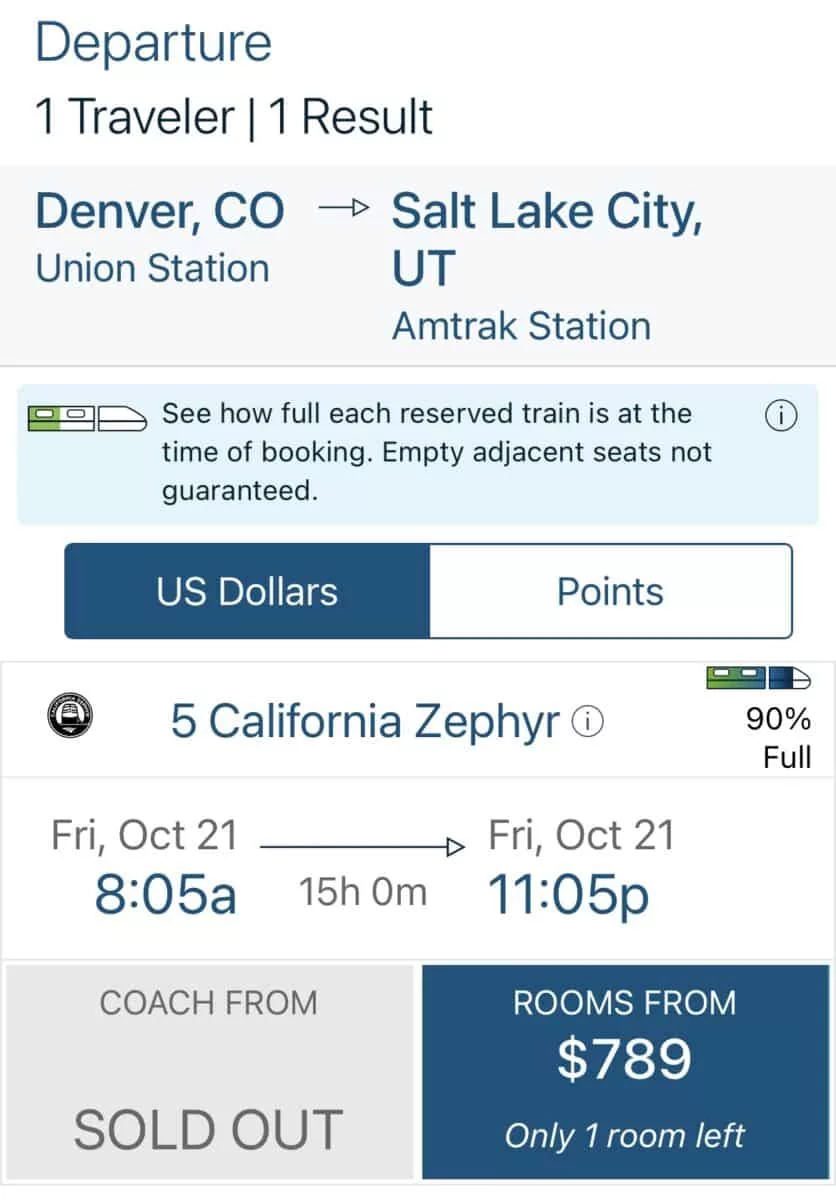
Here’s an example: An Acela train may be fully booked from New York Penn Station to Philadelphia, but there could still be plenty of open seats available from Philadelphia to Washington, DC. If you try to book a ticket from Trenton, NJ, to Washington, DC, it might appear as sold out, even though the train has available seats south of DC.
This happens because passengers board and leave at different stops throughout the journey. A train can start nearly empty, fill up entirely within a few stops, then empty again as passengers reach their destinations. I’ve experienced this countless times—the train isn’t busy at departure, but a large group boards partway through and suddenly every seat is taken. That busy segment sells out while the rest of the route still has availability.
The key insight: Sold-out Amtrak trains often have empty seats before or after the busy segment. If you’re flexible about where you board or get off, you can usually find a way around the sold-out message.
You have two common scenarios:
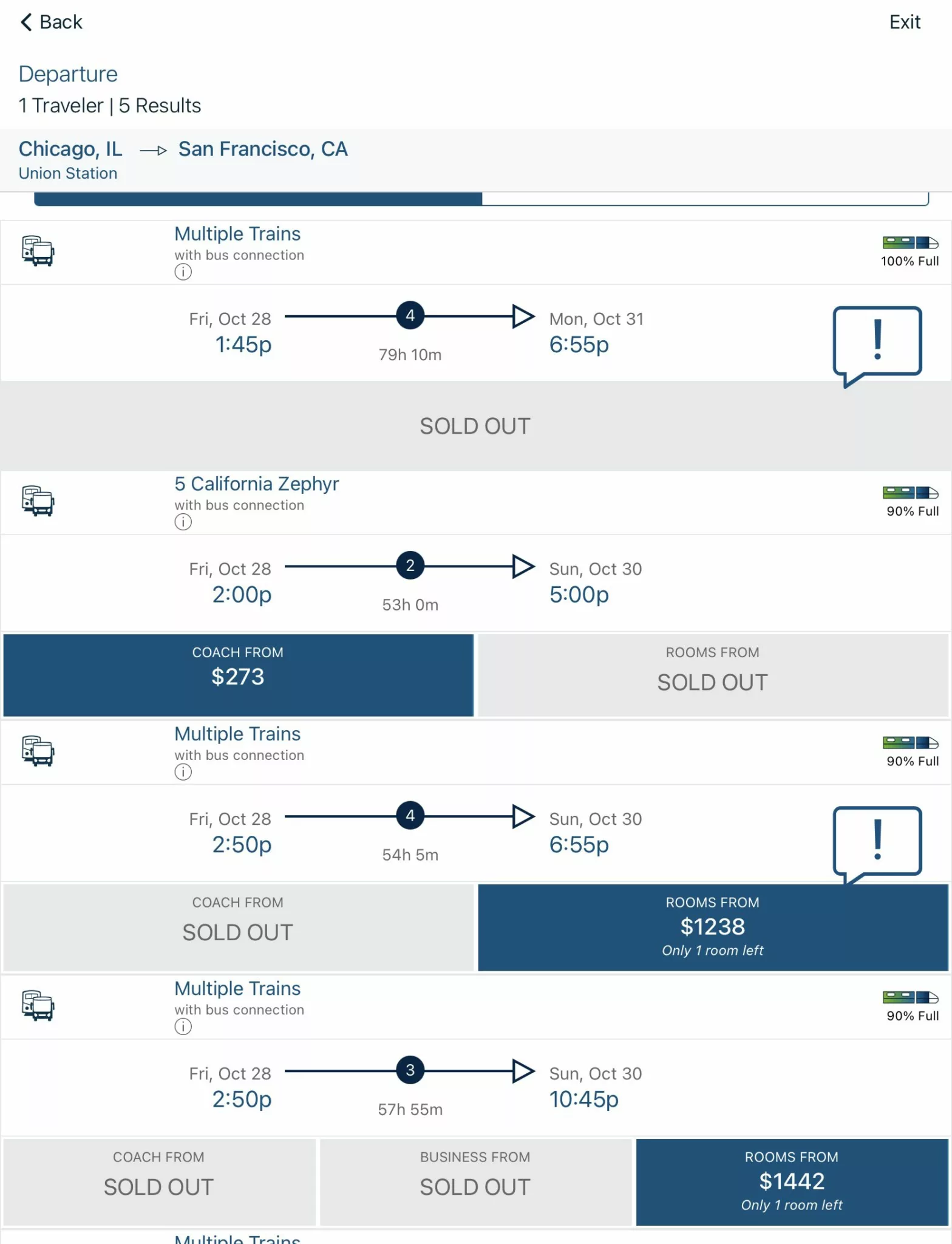
One accommodation type sells out. Sleepers might be full while coach-class seats are available, or vice versa. You can still make your trip, just not in your preferred accommodation. On long-distance routes, you can sometimes book coach class for one segment and upgrade to a sleeper partway through.
Everything shows “sold out.” This indicates that one segment has no inventory available for any accommodation type. The strategies below outline how to address this issue.
When “Sold Out” Actually Means “Canceled”
Sometimes, Amtrak marks trains as sold out when they’ve actually canceled service at the last minute. Flash floods, mechanical failures, staffing emergencies, or other urgent issues can force quick cancellations.
The booking system indicates a train is “sold out” rather than marking it as canceled, which is faster than updating the entire system. I’ve observed this occur several times with the Hiawatha.
To distinguish between a train cancellation and genuine high demand, watch for these signs: If a train suddenly shows as sold out for all dates over the next few days, or if multiple trains on the same route are sold out at the same time, the trains have likely been canceled. In contrast, trains that are genuinely sold out usually have availability scattered on nearby dates.
If you suspect a cancellation, call Amtrak directly or check their service alerts page; they can confirm and help you rebook.
Booking Tips for Sold-Out Amtrak Trains
Here are the quickest ways to work around a sold-out message:
Select an alternative date. Prices fluctuate, so check the dates before and after your target date.
Check alternative trains or routes. Multiple trains may serve your route, or different routes might get you to the same destination. This may require schedule adjustments, but it’s worth checking.
Try a different destination. If you’re traveling for leisure, flexibility on where you end up can solve the problem.
Keep checking for openings. People change plans, and Amtrak releases those seats as they become available. This works best for last-minute trips, though prices may be higher.
Board at a different point. Using the earlier Acela example, you could take a different train from Trenton to Philadelphia, then board the sold-out Acela there.
Advanced Booking Tips for Sold-Out Amtrak Trains
These strategies require more planning but can unlock trips that seem impossible. The first step: figure out exactly where the train is sold out.
Find the Sold-Out Segment
Test different station pairs in the app or on the website until you find when availability opens up. On long-distance trains, check the route schedule and stops to test each station systematically.
Once you know where the bottleneck is, you have several options:
Multi-City Booking (The Power Move)
This is the most useful advanced technique. Book separate segments that bypass the sold-out section.
For sleepers: If roomettes are sold out from your origin but are available from Denver, book a coach seat to Denver, then book the roomette from Denver onward. Often, you will need to exit the coach car and then reboard at the correct sleeper car.
For split trains: On the Empire Builder, Portland sleepers (train 27) often sell out before Seattle sleepers (train 28). Book a Seattle sleeper from Chicago, then switch to a Portland coach or sleeper at Spokane, where the train splits.
Reverse strategy: Book a room starting after the sold-out date, then downgrade the first portion to coach.
Break the Journey
If the sold-out segment is Denver to Salt Lake City, ride to Denver, stay overnight, and catch the next day’s train. This adds time and lodging costs but guarantees you make the trip.
To connect trains with sold-out segments, stay an extra night in the layover city if the next day’s connection is available.
Start from a Different Station
Drive to a station past the sold-out section. Check the math; sometimes the price difference plus gas is less than the cost of waiting or taking a more expensive alternative route.
Use Alternative Transportation to Bridge Gaps
Take a bus or regional train to a station beyond the sold-out segment. For example, if the Hiawatha to Chicago is sold out on Cubs game day, consider taking Metra from Fox Lake or Antioch instead.
Add Someone to Your Existing Room
If you have a room booked and wish to add a travel companion, call Amtrak or visit a station; they can add them to your reservation even if the train appears sold out.
Sold-Out Amtrak Trains Wrap-Up
“Sold out” on Amtrak usually means that a single segment between two stations is fully booked, rather than the entire train. Understanding this can inform various booking strategies, such as multi-city reservations, alternative departure points, split journeys, and flexible timing.
The multi-city booking technique is your most powerful tool for navigating sold-out trains. Master it, and you’ll rarely be stuck.
Safe Travels,
Kev
Do You Love Train Travel?
Want more insider Amtrak travel tips, route guides, and travel updates? Join my free Travels with Kev newsletter to get my Quick Reference Guide to Amtrak Long-Distance Trains, covering train equipment, dining options, and more. It comes out every Thursday!
It is a simple way to start planning smarter, smoother train trips.
If this guide helped you, you can also support my work through my Support Page or by joining me on Patreon. Your support helps keep Travels with Kev going, and paid Patreon members receive a postcard from my travels each month.


A few things could contribute to open seats on “sold-out train.” Many no-shows or a large group may have canceled a trip last minute. Another reason is a train that was supposed to connect with that train was late, so people could not connect and put on another train. There is also a possibility that a car was added to the train but not to the reservation system. All of which could be last-minute reasons why a train says sold out but wasn’t when you traveled. Or the train could be sold out, but it doesn’t seem like it because people are in the Sightseer lounge or cafe car instead of their seats. Amtrak does not have to retain seats for walk-ons.
I have noticed a disruption kind of sold out recently. There was a massive snow storm that covered a large chunk of the US and on top of that, severe cold was occurring, so the Southwest Chief shut down for 3 out of 4 days and travel was disrupted in New Mexico. That caused backups, and now all trains on this route are listed as full for at least a week.
Yeah, sady it will take a few days to week to get everything worked out.